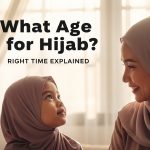
At What Age Do Girls Start Wearing Hijab? A Guide for Parents
The short answer: after puberty. The fuller answer takes more than a sentence. Understanding what hijab means in Islam at the theological level first makes the age question far easier to explain – because the obligation connects to spiritual maturity, not an arbitrary number on a calendar.
When Hijab Becomes Obligatory
Islamic law connects the obligation of hijab to baligh – the state of having reached puberty. For girls, the primary sign is the onset of menstruation. The scholarly consensus across all four major Sunni madhabs is consistent on this point, as documented on islamqa.info: hijab is obligatory from puberty, not before.
Most girls reach baligh between 9 and 13, but there is no fixed calendar year in Islamic law. Parents who ask “is my 8-year-old old enough for hijab?” are usually asking the wrong question – a more grounded question is whether the child understands what it means and whether the right foundation has been built before the obligation arrives.
What Baligh Actually Means in Practice
Baligh is not only a physical threshold. In classical Islamic scholarship, it also implies taklif – accountability. The child becomes responsible for her own religious obligations once she reaches this stage. Before that, the parent carries the responsibility. This is why the question of hijab for young girls is technically a tarbiyah (upbringing) matter, not yet a matter of personal religious duty for the child herself.
The distinction has real practical weight. Forcing hijab on a girl who has not yet reached baligh – or who has but does not understand why – creates compliance without conviction. That is a wrinkle most parenting guides in this space skip over entirely.
Building the Foundation Before the Obligation
Leading by Example
Children absorb what they see normalized. A mother who wears hijab confidently and comfortably communicates a thousand things no lesson could. The way she dresses for different occasions, the ease with which she adjusts her hijab, the absence of complaint or resentment around it – these form the backdrop against which a daughter develops her own relationship with modest dress.
Making Modest Fashion Something She Wants
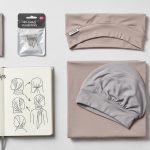
Young girls between 5 and 12 can be encouraged toward modest dress without it being framed as obligation. Loose, soft, colorful clothing. Lightweight scarves she can experiment with without pins. Letting her choose her own colors and fabrics. The objective at this stage is positive association, not compliance. Jersey hijabs for new wearers work particularly well here – the soft stretch means no uncomfortable tightness, no pins required, and the elastic hold stays in place without constant readjustment.
Best Fabrics for Young Girls
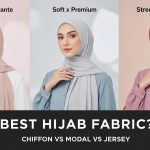
Comfort wins every time for children. An uncomfortable hijab is a hijab that gets pulled off within an hour, which teaches exactly the wrong lesson. Jersey is the most forgiving: it moves with the body, tolerates active play, and requires almost no maintenance during the day. Cotton blends run a close second for cooler weather. If you want the full picture on which fabrics suit different activity levels, the guide on softest hijab fabrics for beginners covers the tradeoffs without the fluff.
Avoid stiff polyester blends for young girls entirely. They trap heat, cause irritation along the hairline, and make what should be a comfortable experience feel punishing.
Jersey hijabs are the most forgiving fabric for first-time wearers – gentle stretch, no pins needed.