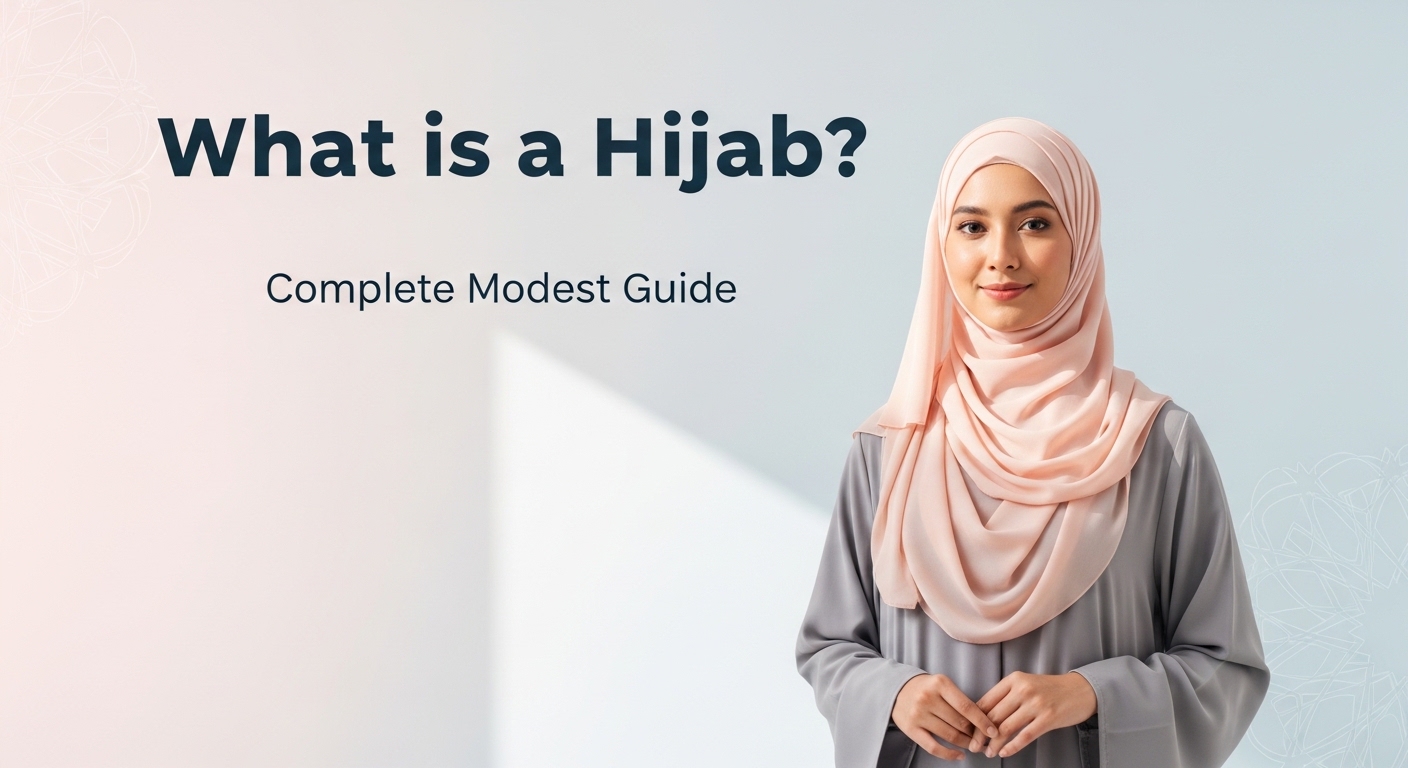
What is a Hijab? The Complete Guide to Modest Dressing
The word hijab carries more weight than most people outside the faith realize. It is not just a scarf. It is not a symbol of oppression – and framing it that way misses the entire point. For over a billion Muslim women around the world, hijab is an act of worship, a declaration of identity, and a daily choice rooted in conviction.
Understanding what hijab actually means – in Arabic, in Islamic theology, and in lived practice – changes how you approach every other question that follows. So before we talk fabric, before we talk styling, that foundation deserves a clear look.
The Meaning of Hijab in Islam
In Arabic, hijab (حجاب) translates literally to “barrier” or “cover.” In its Quranic context, the word appears in verses addressing modesty, privacy, and separation – not just a head covering but a broader concept of boundaries. The verse most often cited is Surah An-Nur 24:31, which instructs believing women to draw their khimar over themselves and guard their modesty. You can read the Arabic original and translation at quran.com, and I’d recommend doing that before forming an opinion based on second-hand summaries.
Over centuries of Islamic scholarship, hijab evolved into common usage as the term for the headscarf specifically. But technically, it describes an entire approach to modest presentation – covering, comportment, and intention together. The headscarf is one visible expression of that broader principle.
Why Muslim Women Choose Hijab
The motivations are more varied than any single article can capture. For many women, hijab is an obligation – a religious duty they fulfill the way they fulfill prayer. For others, it started as family tradition and became personal conviction over time. Some women come to it later in life, some from childhood. The journey is rarely linear.
There is also a reason I rarely see discussed honestly: the freedom angle. Wearing hijab removes a layer of social pressure around appearance. You stop being evaluated on your hair, your neck, the shape of your face by strangers. That is not a small thing. It shifts attention – deliberately, by design.
Comfort with that choice depends enormously on the environment around you. A woman in a supportive community experiences hijab differently from a woman navigating daily scrutiny at work or school. That tension is real and deserves acknowledgment, not papering over.
Types of Islamic Modest Clothing
Modest Islamic dress is not one garment. It is a family of options, each with different coverage levels, cultural origins, and practical applications.
The Hijab (Headscarf)
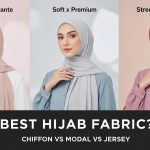
The most widely worn form. A rectangular or square fabric panel draped over the head and pinned or tucked under the chin, covering the hair and neck. Styles range from the simple wrap to layered, structured looks. Fabric choice matters enormously here – chiffon drapes differently from jersey, and the difference between a comfortable day and a miserable one often comes down to that single decision.
The Abaya
A full-length, loose outer garment worn over everyday clothing. Common across the Gulf, South Asia, and increasingly popular globally as modest fashion grows. The abaya works as a single cover-all layer – practical, versatile, and increasingly available in cuts that are anything but shapeless. If you want full-coverage options, browse our abaya collection for styles that pair with any hijab fabric.
The Jilbab and Khimar
The jilbab is a loose outer cloak covering the body from shoulder to ankle. The khimar specifically covers the head, neck, and chest, extending further than a standard hijab. Both appear in Quranic references. Women who want maximum coverage without the formality of a full abaya often reach for the khimar first.
Essential Rules of Modest Dress
Islamic scholars have outlined specific conditions that define valid modest dress – it is not simply “cover your hair.” The full framework covers fabric transparency, fit, intention, and even fragrance. If you want the complete breakdown, the guide on the 7 conditions of hijab every woman should know walks through each requirement without the vagueness most casual articles leave in.
One detail that catches women off guard: modesty extends beyond clothing to behavior in many scholarly interpretations. There is also a separate, important question of when girls start wearing hijab – which involves the concept of baligh (puberty) and varies by school of thought.
Starting Your Modest Wardrobe
The first mistake most new wearers make is buying too much at once. You do not know your preferences yet – which fabrics feel right in your climate, which styles work for your face shape, which pins you actually reach for. Start with three hijabs maximum. Two in your most-worn neutral (black, grey, navy) and one in a color that lifts the outfits you already own.
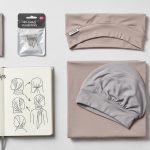
Jersey fabric for daily wear. Chiffon when you want drape and occasion-ready looks. That split covers 90% of what most women need in their first season. An undercap underneath – always – because it anchors the hijab, absorbs sweat, and makes the whole thing stay put without aggressive pinning. From there, the everyday hijab collection at Hijabo has the range to build on without decision fatigue.
Ready to build your wardrobe? Start with our everyday hijab collection at Hijabo.