Hijab Styling for Beginners: Stay Comfortable All Day
Most beginner hijab guides open with a list of styles. This one does not. Before you learn a single wrapping technique, you need to understand why technique is secondary to one other variable – because how fabric choice changes everything for beginners is the lesson that reframes every other decision. The wrong fabric makes every method feel uncomfortable. The right fabric makes even an imperfect wrap stay in place.
Why Technique Matters More Than You Think
Here is the honest version: most beginners spend the first three months adjusting their hijab every 45 minutes because of pinning errors, not because the style is wrong. The scarf slips because the undercap has no grip. It loosens because the single pin at the chin is doing the work of three. It bunches because the starting fold was uneven. These are technique problems – which is partly true, though that framing leaves something out. A slippery chiffon on a smooth undercap multiplies every technique error. Jersey on a cotton undercap forgives them.
Fix the undercap first. Always.
The Classic Rectangle Wrap
This is the method 80% of hijab-wearing women use for daily wear. Take a rectangular hijab – 170cm to 185cm is the standard working length – and place it over your head with one side longer than the other, roughly a 35/65 split. Pin under the chin or use a magnetic closure. Take the longer side, wrap it across the chest, then pull it up and around the back of the head, tucking or pinning at the opposite ear. The shorter side stays draped over the shoulder or tucked in at the neckline.
Two pins total. One under the chin, one at the temple. The rest is tension management, not pinning. Women who use five pins are compensating for a grip problem, not solving it.
The Instant Slip-On Hijab
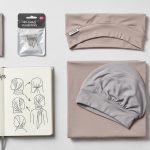
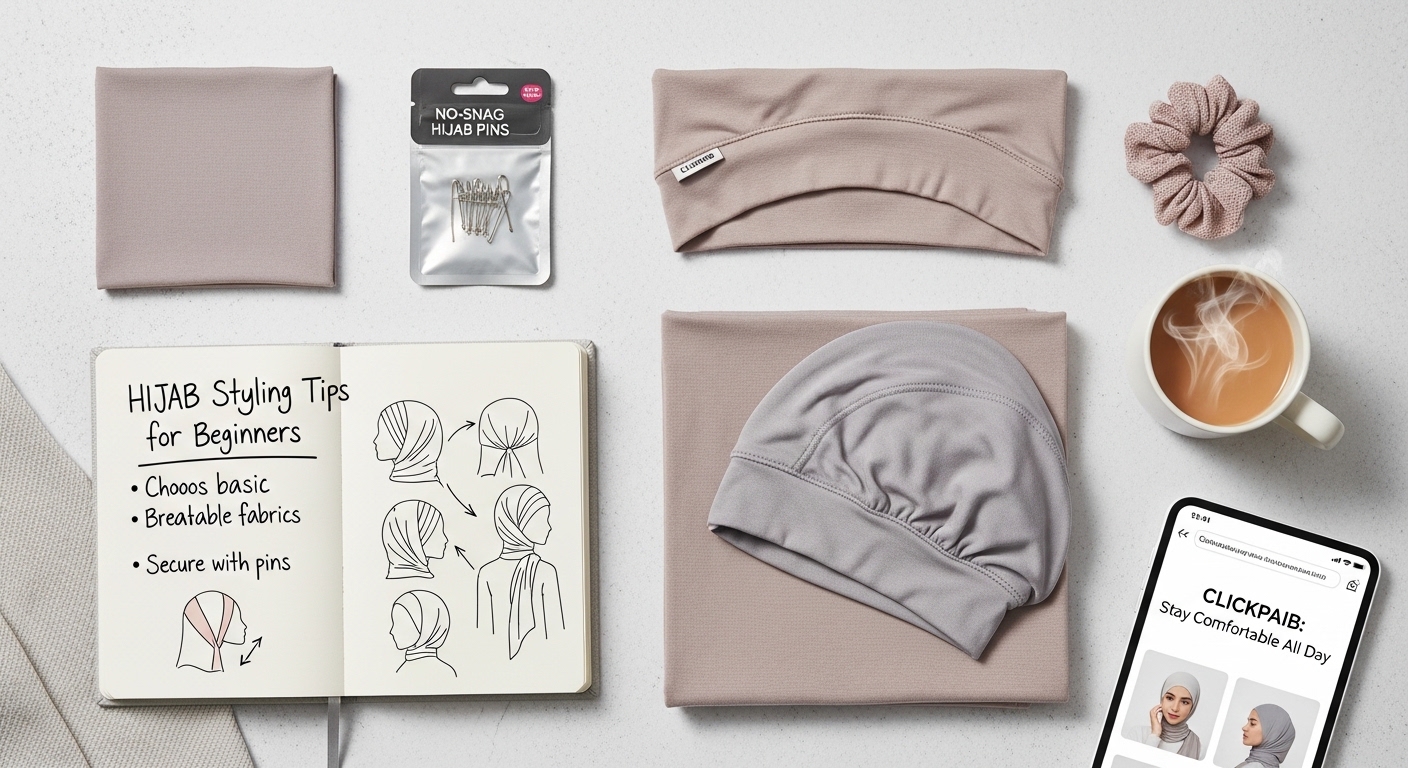
Pre-sewn slip-on hijabs have a sewn cap that fits over the head with fabric already shaped and pre-draped. Zero pinning. Zero technique. On in 30 seconds. For school mornings, quick errands, travel days, or any situation where the ritual of wrapping is not something you have bandwidth for, the slip-on format removes every friction point. Slip-on jersey hijabs for beginners come in jersey specifically because the stretch gives a clean fit across different head sizes without gaps at the forehead or bunching at the back.
Slip-on jersey hijabs are genuinely the best starting point. No pins, no fuss, no adjustment every hour.
How to Keep It in Place All Day
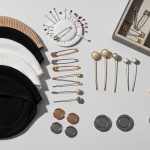
Three things hold a hijab in place: grip from the undercap, structural anchoring from pins or magnets, and fabric tension from the wrap itself. Most beginners rely entirely on pins because the other two variables are invisible. A cotton or velvet-lined undercap adds friction at the scalp level that anchors the hijab before a single pin goes in. The must-have accessories for a secure hijab guide covers the specific undercap types and magnetic alternatives that replace aggressive pinning entirely – worth reading before you buy anything.
On the pinning itself: use snag-free pins or magnets on chiffon and other delicate fabrics. Regular straight pins create small pulls that balloon into visible damage over time.
Mistakes Nobody Warns You About
Starting your wrap without a mirror. It feels obvious but a significant number of beginners describe spending months with consistently uneven wraps because they were pinning by feel rather than sight. Use a mirror until the muscle memory is solid. The second mistake: wearing the wrong fabric for the temperature. A beautifully wrapped chiffon hijab in 36-degree heat is miserable by hour two, and misery breeds the desire to take it off. Matching fabric to conditions is not a luxury decision – it is how you make daily wearing sustainable. The full breakdown of best lightweight hijabs for warm weather handles the seasonal selection in detail.